Redesigning Harvest's user onboarding

Redesigning Harvest's user onboarding

Redesigning Harvest's user onboarding

From welcome flow to in-product getting started. An end-to-end redesign that lifted trial-to-paid by 8%.

From welcome flow to in-product getting started. An end-to-end redesign that lifted trial-to-paid by 8%.

Role

Design strategy, UX, UI, research, plus hands-on frontend where it moved the work forward.

Design strategy, UX, UI, research, plus hands-on frontend where it moved the work forward.

Team

Me

PM

EM

FE

BE

What this case study covers

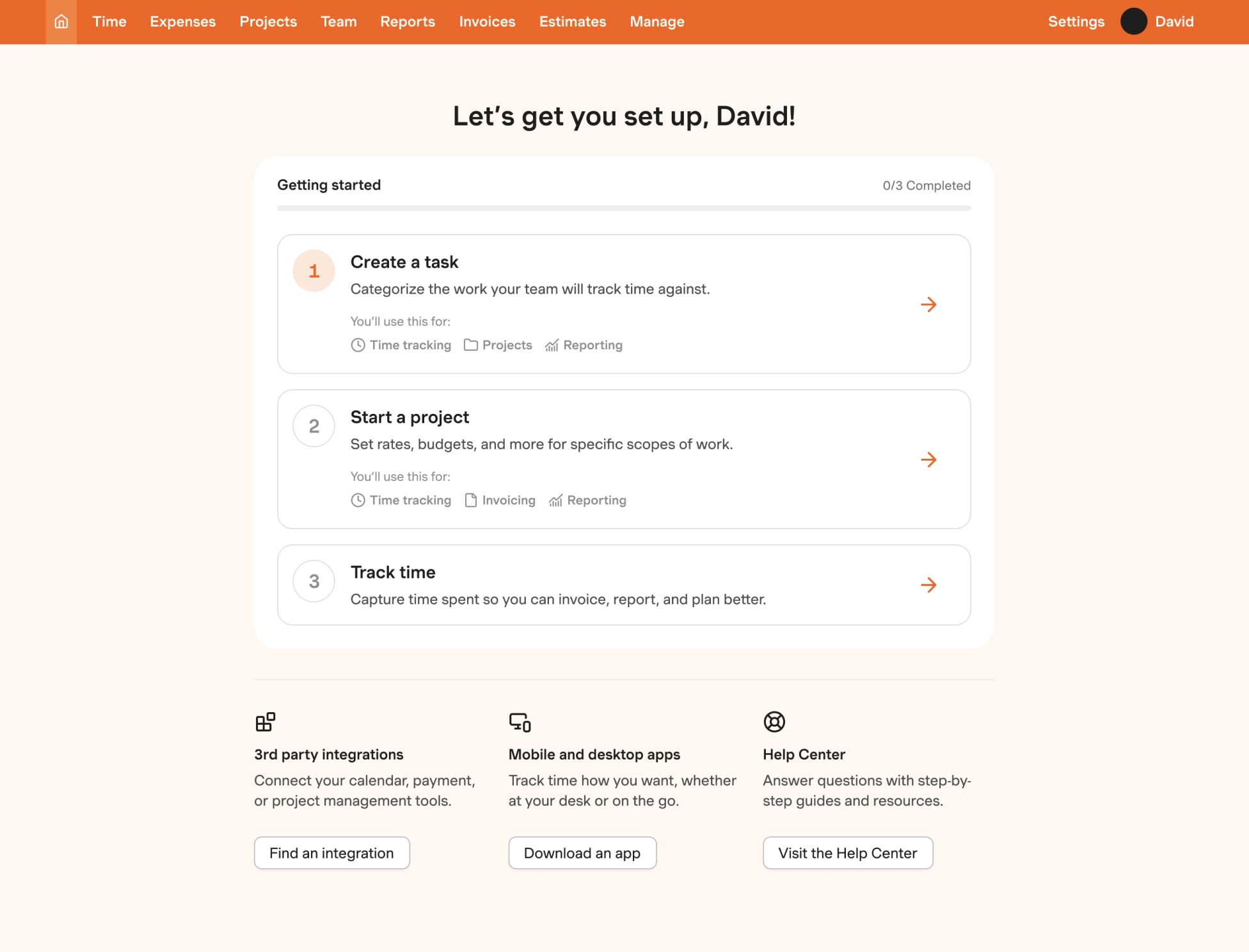
Harvest's onboarding had two problem areas: a welcome flow losing 30% of signups before they reached the product, and an in-product getting-started experience only 1.5% of trialists ever found. We rebuilt both.
Harvest's onboarding had two problem areas: a welcome flow losing 30% of signups before they reached the product, and an in-product getting-started experience only 1.5% of trialists ever found. We rebuilt both.

Impact

Welcome flow completion

Welcome flow completion

70% → 90%

70% → 90%

Projects created during welcome flow

Projects created during welcome flow

60% → 85%

60% → 85%

Activation rate

Activation rate

6.6% → 25.2%

6.6% → 25.2%

Trial-to-paid conversion

Trial-to-paid conversion

+8%

+8%

One guardrail metric (repeat sessions) moved against us. Covered later in the case study.

The problem

Losing half our signups after their first session.

Losing half our signups after their first session.

Losing half our signups after their first session.

What the funnel looked like:

What the funnel looked like:

30% of signups dropped out of the welcome flow itself, before even reaching the product

30% of signups dropped out of the welcome flow itself, before even reaching the product

5,500 of 10,000 monthly signups gone after session one

5,500 of 10,000 monthly signups gone after session one

75% of team trials never invited a teammate

75% of team trials never invited a teammate

57% never tracked time

57% never tracked time

93% never created an invoice

93% never created an invoice

<1.5% ever found the existing getting-started checklist

<1.5% ever found the existing getting-started checklist

Research

How we diagnosed the problem.

How we diagnosed the problem.

How we diagnosed the problem.

Methods:

Methods:

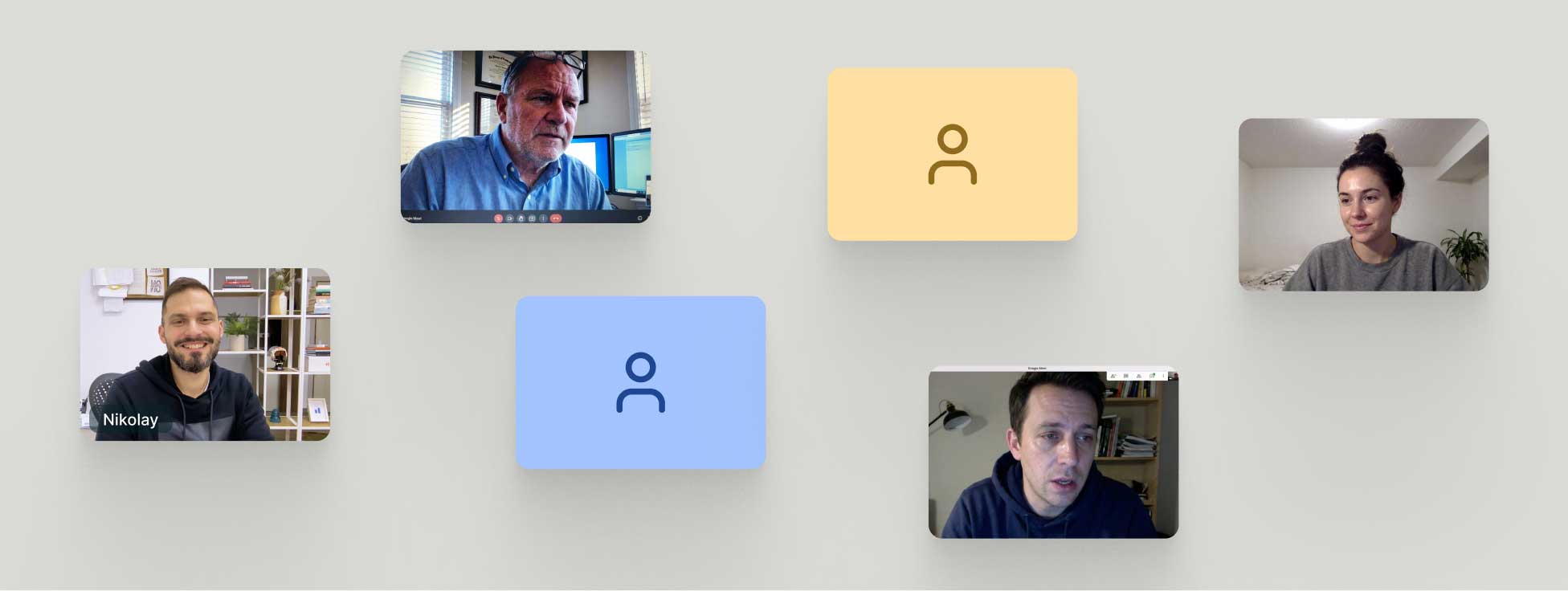
Journey-mapping every phase: sign up → explore → use → decision

Journey-mapping every phase: sign up → explore → use → decision

Quant analysis via Pendo, Heap, and Mode: conversion funnel, feature adoption, repeat sessions

Quant analysis via Pendo, Heap, and Mode: conversion funnel, feature adoption, repeat sessions

User interviews with churned prospects and successfully converted trialists

User interviews with churned prospects and successfully converted trialists

Usability testing on the welcome flow to diagnose the 30% drop-off

Usability testing on the welcome flow to diagnose the 30% drop-off

UserVoice and NPS analysis: voice-of-customer patterns

UserVoice and NPS analysis: voice-of-customer patterns

I led design research alongside the growth team's PM, data partner, and CSM.
What we heard

"Please, just tell me where to look and what to do."

"Please, just tell me where to look and what to do."

"Please, just tell me where to look and what to do."

— Camille, consultant

— Camille, consultant

"Maybe I'm not quite ready."

"Maybe I'm not quite ready."

"Maybe I'm not quite ready."

— Daria, architect

— Daria, architect

We had interview sessions with more than 20 prospects and customers.
The insight

Not all actions are equal - some predict conversion.

Not all actions are equal - some predict conversion.

Not all actions are equal - some predict conversion.

Clients, tasks, and projects were 2–3× more predictive of conversion than time tracking.

Clients, tasks, and projects were 2–3× more predictive of conversion than time tracking.

This reshaped the brief: onboarding shouldn't point users at the feature Harvest is named after. It should point them at the actions that turn trials into paying teams.

This reshaped the brief: onboarding shouldn't point users at the feature Harvest is named after. It should point them at the actions that turn trials into paying teams.

Feature completed

Feature completed

Conversion rate

Conversion rate

Clients

Clients

15.5%

15.5%

Tasks

Tasks

12.9%

12.9%

Projects

Projects

11.9%

11.9%

Integrations

Integrations

10.6%

10.6%

Reports

Reports

8.1%

8.1%

Invoices

Invoices

5.7%

5.7%

Time tracking

Time tracking

5.4%

5.4%

Task creation became our primary activation metric: it predicts conversion, and it's a leading indicator we could measurably move.

Solutions

Streamline the welcome flow

If we make the initial quiz more relevant, users are more likely to return for a second session, because people tend to be consistent with their previous actions.

If we make the initial quiz more relevant, users are more likely to return for a second session, because people tend to be consistent with their previous actions.

Activate via an in-product checklist

If we frame onboarding items as a grouped set and expose how-to references, users are more likely to complete them, because tasks that are part of a group are more tempting to complete (pseudo-set framing).

If we frame onboarding items as a grouped set and expose how-to references, users are more likely to complete them, because tasks that are part of a group are more tempting to complete (pseudo-set framing).

First bet

The re-designed welcome flow

The re-designed welcome flow

The re-designed welcome flow

We kept the multi-step structure but rewrote every question and gave the flow its own identity, so users stopped mistaking the project-creation step for the actual product.

We kept the multi-step structure but rewrote every question and gave the flow its own identity, so users stopped mistaking the project-creation step for the actual product.

Welcome flow completion

Welcome flow completion

70% → 90%

70% → 90%

Projects created during welcome flow

Projects created during welcome flow

60% → 85%

60% → 85%

Second bet

In-product starting point

In-product starting point

In-product starting point

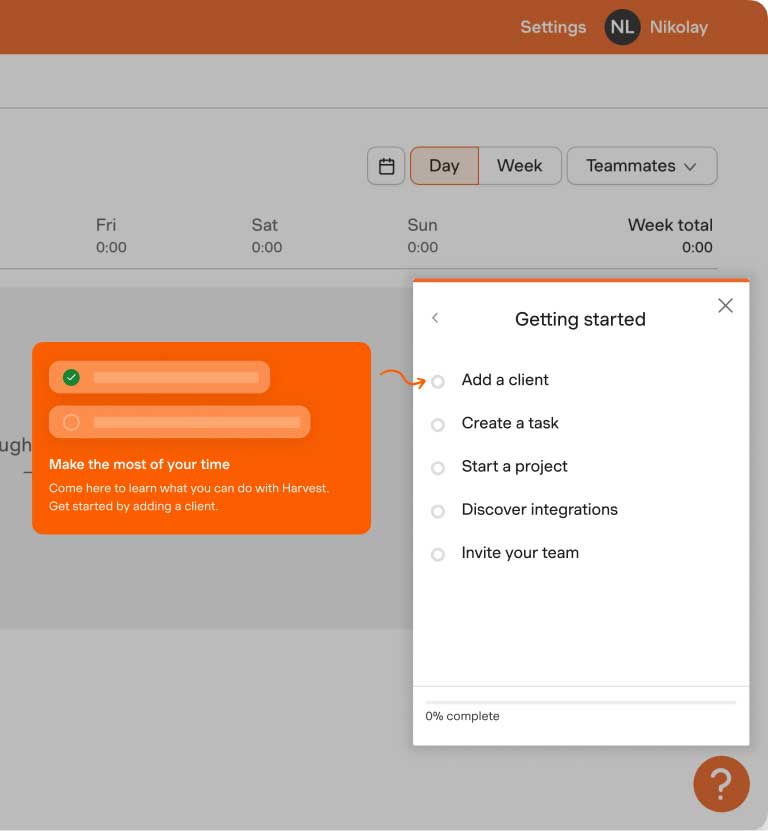
Harvest used Pendo to host feature tours and a getting-started checklist. Fewer than 1.5% of trialists ever found it.

Harvest used Pendo to host feature tours and a getting-started checklist. Fewer than 1.5% of trialists ever found it.

v1 — Leverage what we had

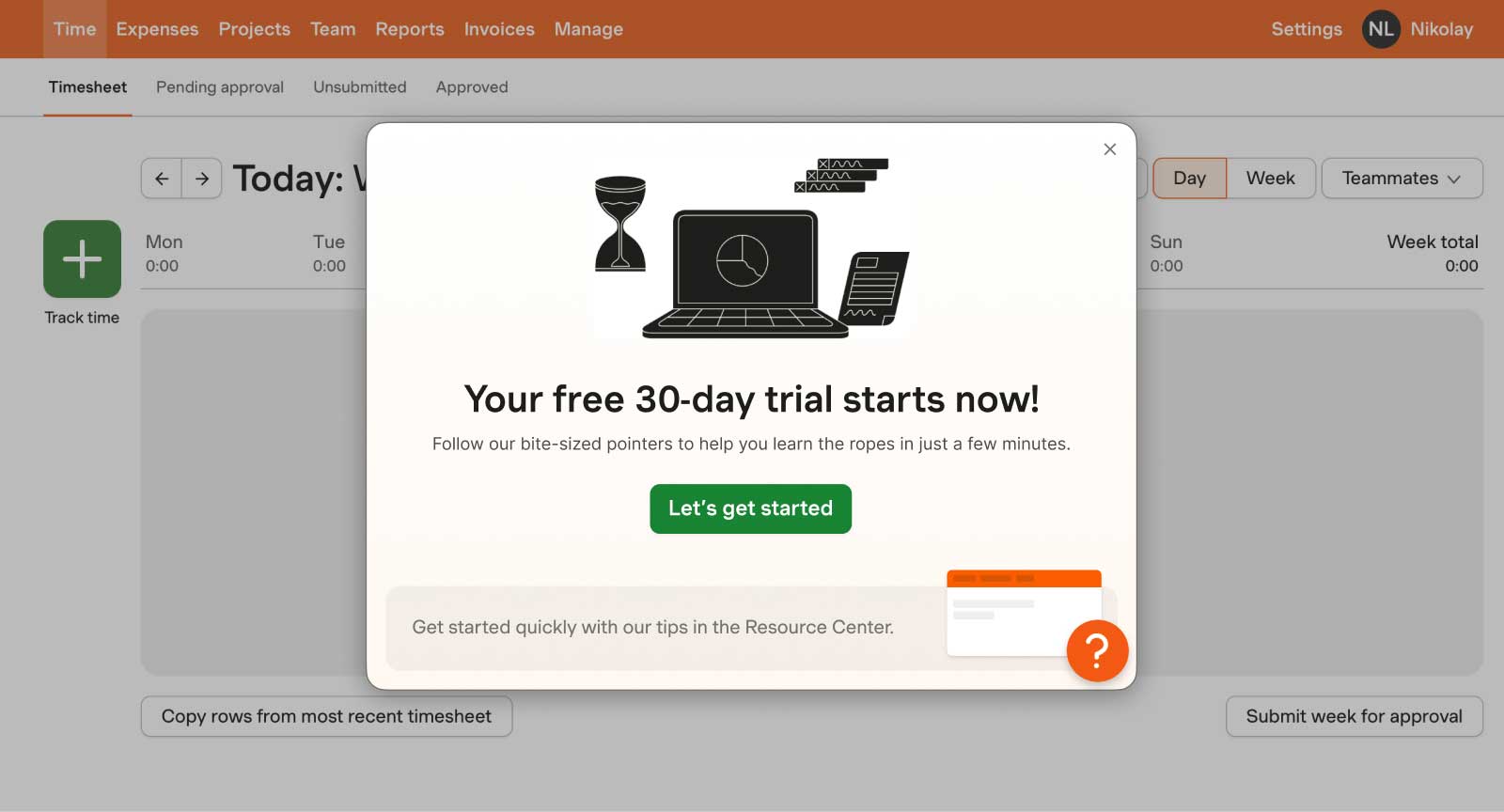
Two fast iterations, shipped solo, no engineering dependency.
Two fast iterations, shipped solo, no engineering dependency.
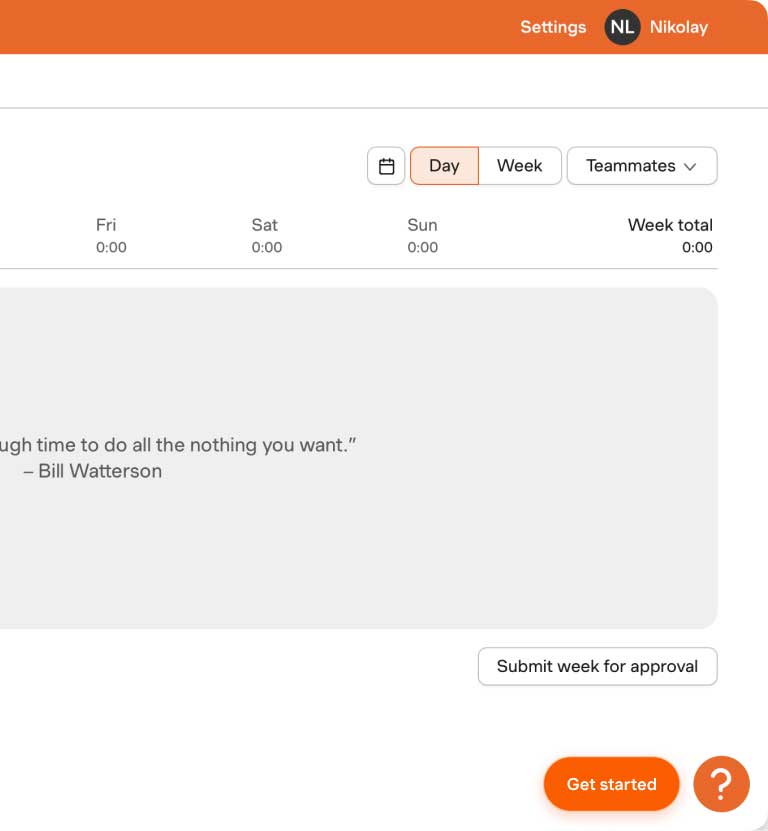
Resource Center interactions

Resource Center interactions

+400%

+400%

Feature interaction at account level

Feature interaction at account level

+25%

+25%

Resource Center visits

Resource Center visits

+38%

+38%

Checklist engagement

Checklist engagement

+30%

+30%

v2 — Built into the product

A dedicated first-run page replacing the popup.
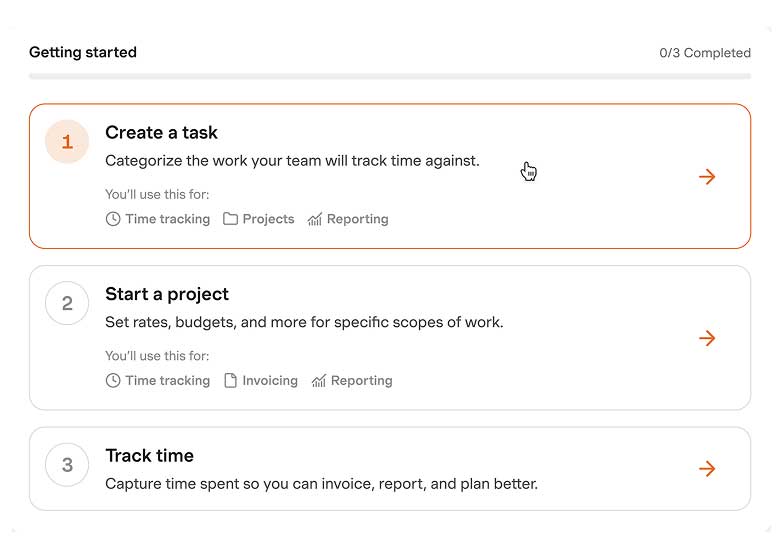
A dedicated first-run page replacing the popup.
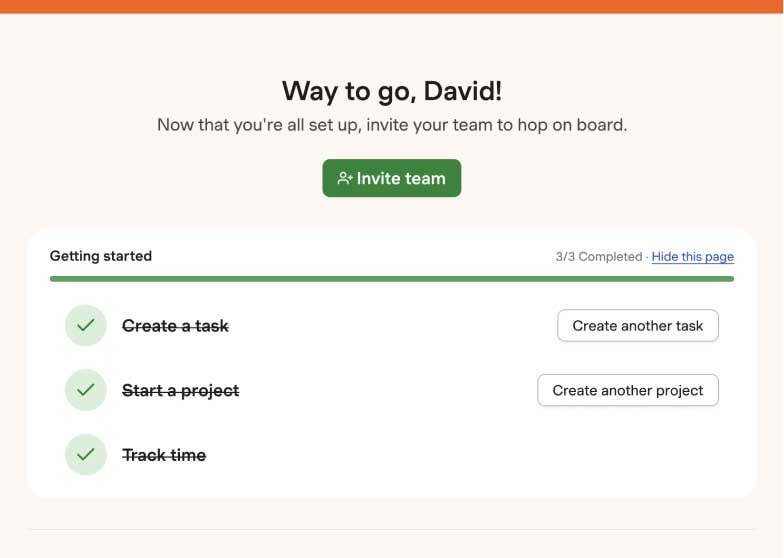
Results

Core feature engagement significantly up

Core feature engagement significantly up

Core feature engagement significantly up

Action

Action

Result

Result

Task created

Task created

+282% rel. ✅

+282% rel. ✅

Client created

Client created

+48% rel. ✅

+48% rel. ✅

Project created

Project created

+26% rel. ✅

+26% rel. ✅

Time entry created (guardrail)

Time entry created (guardrail)

Held steady ✅

Held steady ✅

Reflection

Activation isn't a single feature. It's a system.

Activation isn't a single feature. It's a system.

The best next step isn't always iterating on what you built. Sometimes it's looking upstream. The welcome-flow redesign moved more numbers than any in-product change did.

The best next step isn't always iterating on what you built. Sometimes it's looking upstream. The welcome-flow redesign moved more numbers than any in-product change did.

Top-of-funnel decisions shape mid-funnel outcomes. You can't optimize a checklist if the welcome experience is already losing 30% of users before they see it.

Top-of-funnel decisions shape mid-funnel outcomes. You can't optimize a checklist if the welcome experience is already losing 30% of users before they see it.

Appendix

The tradeoff

A guardrail we knew we were risking, and decided to ship anyway.

A guardrail we knew we were risking, and decided to ship anyway.

Repeat sessions: 🔻 -10.55% (53% → 47%)

Repeat sessions: 🔻 -10.55% (53% → 47%)

Why:

  • Users landed on a checklist instead of going straight to the app

  • Additional friction before they could explore freely

  • The checklist didn't create enough value for users who weren't interested in Harvest to begin with

Why:

  • Users landed on a checklist instead of going straight to the app

  • Additional friction before they could explore freely

  • The checklist didn't create enough value for users who weren't interested in Harvest to begin with

The squad and leadership discussed the likely tradeoff before the test. Core engagement lifts and trial-to-paid were the primary success metrics; repeat sessions was a guardrail we were willing to risk if conversion moved enough. It did. Trial-to-paid +8%, core actions up decisively. So we shipped to 100% of account owners with a clear hypothesis for the next iteration.

The squad and leadership discussed the likely tradeoff before the test. Core engagement lifts and trial-to-paid were the primary success metrics; repeat sessions was a guardrail we were willing to risk if conversion moved enough. It did. Trial-to-paid +8%, core actions up decisively. So we shipped to 100% of account owners with a clear hypothesis for the next iteration.

Where I'd take this next

Personalizing the hub based on user intent. Richer setup paths for users who want guidance; lighter-touch exploration for users who don't, recovering the repeat-session cost from v2.

Personalizing the hub based on user intent. Richer setup paths for users who want guidance; lighter-touch exploration for users who don't, recovering the repeat-session cost from v2.

A natural place to apply intelligent defaults: use signal from the welcome flow answer to tailor the getting-started experience without another question.

A natural place to apply intelligent defaults: use signal from the welcome flow answer to tailor the getting-started experience without another question.

The welcome flow we didn’t ship

Before landing on the redesigned flow, we explored a more ambitious concept: an interactive welcome experience where the UI behind the questions would respond to the user's answers in real time. As you selected what you wanted to accomplish with Harvest, the app preview alongside would populate and change. Onboarding as education, built into the act of answering.

Before landing on the redesigned flow, we explored a more ambitious concept: an interactive welcome experience where the UI behind the questions would respond to the user's answers in real time. As you selected what you wanted to accomplish with Harvest, the app preview alongside would populate and change. Onboarding as education, built into the act of answering.

Why we rejected it: Too resource-heavy for the bet. We wanted to move fast on fixing the drop-off, and this concept would have needed significant engineering investment before we knew whether a lighter redesign could close the gap. It did (70% → 90%), which validated the call.
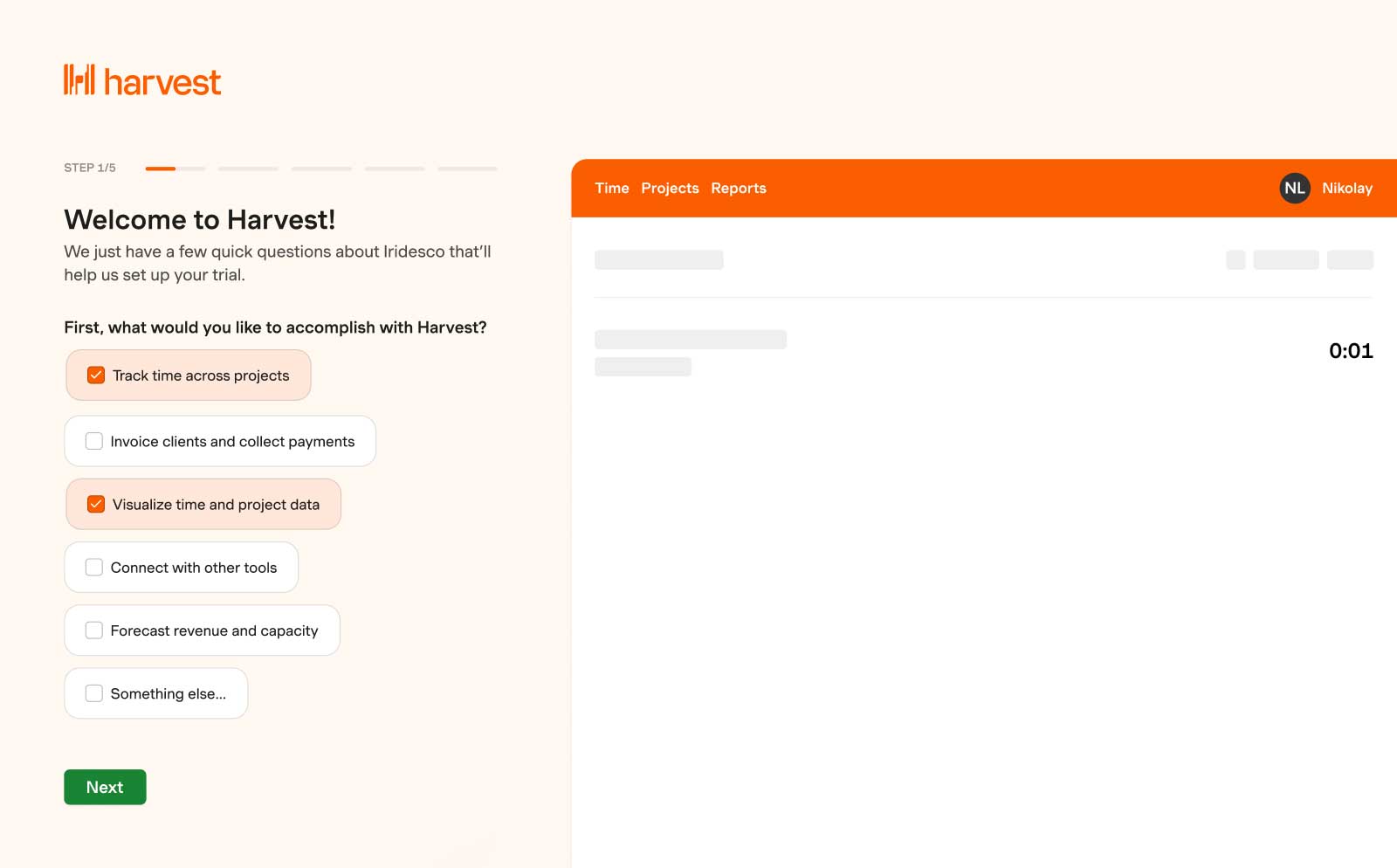
Why we rejected it: Too resource-heavy for the bet. We wanted to move fast on fixing the drop-off, and this concept would have needed significant engineering investment before we knew whether a lighter redesign could close the gap. It did (70% → 90%), which validated the call.

You can find me here

© 2026 Nikolay Lechev

Nikolay Lechev